Emergency Roof Repair in Coral Springs, FL
When a storm tears open your roof or water starts pouring through the ceiling, you need the damage contained before it spreads any further. We provide emergency tarping, temporary waterproof protection, and permanent repair planning for homes and businesses throughout Coral Springs and Broward County.
When Your Roof Needs Immediate Attention
Not every roof problem demands an emergency call — but certain situations escalate quickly. Recognizing when damage requires urgent response can prevent thousands of dollars in additional interior and structural damage.
Water actively entering your home during or after a storm
Steady dripping or flowing water through ceilings, walls, or around windows during rainfall signals a significant breach in the roof system. Every hour of continued water intrusion increases the risk of drywall saturation, insulation damage, and mold development in wall cavities.
Visible daylight or open holes in the roof structure
If you can see sky through your attic or ceiling, the roof deck has been compromised. Fallen tree limbs, airborne debris, and wind-lifted roofing materials during Broward County storms can punch through sheathing and leave the interior fully exposed to the elements.
Large sections of roofing material displaced by wind
Hurricanes and strong tropical storms can strip entire courses of shingles or dislodge rows of tiles. When large areas of underlayment or decking are left uncovered, the next rainfall — even a brief afternoon shower — can send water directly into the building.
Sagging ceiling areas suggesting trapped water above
A bulging or sagging section of drywall indicates water pooling above the ceiling surface. This situation can worsen rapidly — the weight of accumulated water may cause the ceiling to collapse, creating both water damage and a safety hazard inside the home.
Steps You Can Take Before Help Arrives
While waiting for professional assistance, there are several things you can safely do from inside the building to limit further damage. Do not climb on a wet, damaged, or storm-compromised roof.
Move valuables away from the affected area
Clear furniture, electronics, and personal belongings from beneath active drips or saturated ceiling sections. Use buckets or containers to catch water and reduce floor damage.
Document the damage with photos and video
Before any cleanup, take clear photographs and videos of all visible damage — ceiling stains, active leaks, displaced roofing material visible from ground level, and any debris. This documentation supports insurance claims and helps the repair crew understand the scope before arriving.
Contain water entry where possible
Place towels around baseboards, use plastic sheeting to protect floors, and position containers to collect dripping water. If a ceiling is bulging with trapped water, carefully puncture the lowest point into a bucket to relieve pressure and prevent a larger collapse.
Turn off electricity in affected areas
If water is entering near electrical outlets, light fixtures, or ceiling fans, shut off the breaker for that area. Water and electricity create a serious safety risk. Do not touch wet electrical components.
Contact your insurance provider promptly
Report the damage to your insurer as soon as it's safe to do so. Most policies require timely notification and reasonable steps to prevent further loss. Note your claim number and any instructions the adjuster provides.
Common Causes of Emergency Roof Damage
In South Florida, emergency roof situations most often result from weather events — but aging materials and deferred maintenance also play a role. Understanding the cause helps determine the right repair approach once conditions stabilize.
Hurricane & Tropical Storm Winds
Sustained high winds and sudden gusts during hurricane season lift shingles, crack tiles, peel back flashing, and can remove entire roof sections. Coral Springs sits in a High Velocity Hurricane Zone, meaning roofing systems face code-level wind demands that older installations may not meet.
- Missing or wind-creased shingles across broad areas
- Displaced ridge and hip cap materials
- Peeled-back metal panels or membrane sections
Fallen Trees & Airborne Debris
Heavy branches and wind-propelled objects can puncture the roof deck, dislodge roofing materials, and create openings that allow immediate water entry. Even a moderate branch impact can crack tiles or break through sheathing on aging roofs.
- Puncture holes through the roof covering and deck
- Crushed or shattered tiles beneath impact zone
- Broken rafters or trusses under heavy limb weight
Torrential Rainfall & Wind-Driven Rain
South Florida downpours can exceed several inches per hour. When combined with horizontal wind-driven rain, water pushes beneath shingles, into open flashing joints, and through any compromised seal or material gap — flooding areas that normally stay dry during lighter rain.
- Water entering during heavy storms but not light rain
- Multiple leak points appearing simultaneously
- Rapid ceiling saturation during intense rainfall
Aging Materials Reaching Failure Point
Roofing materials subjected to years of Florida UV exposure, heat cycling, and humidity eventually lose their integrity. A roof that has been showing minor wear for years can fail suddenly during a storm that would not have damaged it when it was newer.
- Brittle or crumbling shingles that break under wind load
- Deteriorated underlayment allowing widespread seepage
- Corroded flashing separating from wall transitions
Flat Roof Membrane Failures
Commercial and residential flat roofs with TPO, modified bitumen, or built-up systems can experience sudden membrane failures during storms. Open seams, punctures from debris, and ponding water combined with wind create conditions for rapid interior flooding.
- Ponding water pooling around membrane tears
- Seams peeled open along edges or equipment mounts
- Visible membrane bubbling or splitting
Failed Previous Repairs
Temporary patches, improperly applied sealant, or mismatched materials from past repair attempts can give way under storm conditions. Emergency situations frequently involve areas that were thought to be repaired but were never fully resolved beneath the surface.
- Dried roof cement cracking away from prior patch
- Recurrence of leaking in previously repaired areas
- Mismatched repair materials pulling apart at transitions
Emergency Tarping vs. Permanent Repair
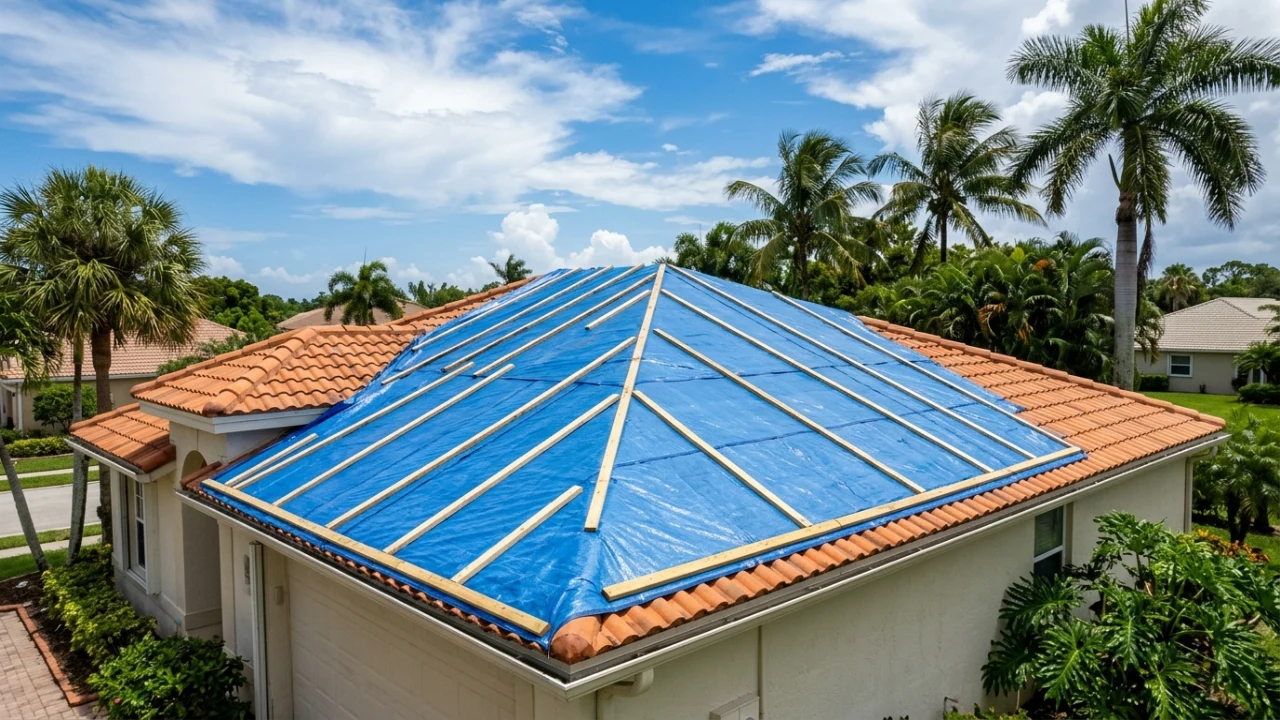
Emergency tarping is a critical first step — but it's not the repair itself. A properly secured tarp prevents additional water from entering through the damaged area, buying time until conditions are safe and materials are available for a lasting fix. We anchor tarps beyond the visible damage perimeter, accounting for water that may travel beneath the roof covering before reaching the breach.
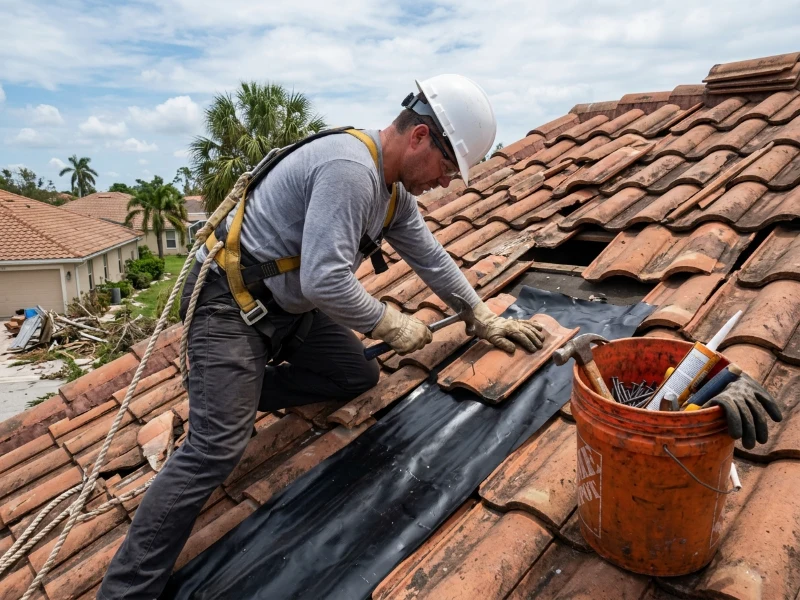
The permanent repair phase begins after a full damage assessment. Depending on the severity, this may involve targeted leak repairs, material replacement, flashing corrections, or — in cases of widespread structural damage — a broader restoration that addresses decking, underlayment, and the roof covering itself.
Rushing into permanent repairs while conditions remain unstable or while the full scope of damage is still unclear can lead to incomplete fixes. Our approach separates the two phases deliberately: protect the property first, then plan and execute a repair that addresses everything the storm exposed.
Our Emergency Roof Response Process
Emergency roof work follows a structured sequence designed to protect your property first and plan lasting repairs second. Here's how we handle urgent roof damage in Coral Springs.
Assess the Situation and Safety Conditions
We evaluate the damage severity, current weather conditions, and safe access to the roof. If conditions are too dangerous for roof access — active lightning, sustained high winds, or structural instability — we focus on interior mitigation until it's safe to proceed.
Secure Temporary Protection
When safe access is confirmed, we install tarps or temporary board-up systems to cover the damaged area. Tarps are extended beyond the breach, secured against wind lift, and positioned to divert water away from the opening. The goal is complete water exclusion from the damaged zone until permanent repairs begin.
Document Damage for Repair Planning and Insurance
We photograph all visible damage — exterior roof conditions, interior water entry points, and the extent of material loss or displacement. This documentation supports both your insurance claim process and our permanent repair planning. We note the affected areas, material types, and any secondary damage to decking or structure.
Plan and Execute Permanent Repairs
Once conditions stabilize and the full damage scope is understood, we provide a written repair plan and estimate. Permanent repairs may include shingle replacement, flashing corrections, decking replacement, or broader material restoration — depending on what the storm exposed.
Emergency Repair Scope Based on Damage Severity
The scope of permanent repair following an emergency depends on what the storm or event exposed. Here's what to expect based on common findings.
Emergency Roof Repair FAQ
Any condition where water is actively entering the building, structural materials are exposed to the elements, or the roof has been breached by storm damage or fallen debris qualifies as an emergency. The priority is stopping further water intrusion and protecting the interior while conditions are assessed for permanent repair.
A properly secured tarp covers the damaged area and diverts water away from the breach. We anchor tarps to prevent wind lift and extend coverage beyond the visible damage to account for water that may travel beneath roofing materials. Tarping is a temporary measure designed to prevent additional interior damage until permanent repairs can be completed safely.
Permanent repairs require dry conditions and safe roof access. During active storms, the focus is on interior damage mitigation and, when conditions allow safe access, securing temporary protection over the damaged area. Permanent repair planning begins once weather conditions stabilize.
Coverage for sudden storm damage depends on your specific policy, the cause and extent of damage, your deductible, and the insurer's assessment. Document the damage with photos, prevent further loss where safely possible, and contact your insurance provider for claim instructions. We can provide inspection documentation and photos to support your claim process.
A professionally installed tarp can provide temporary protection for several weeks under normal weather conditions. However, tarps are not permanent solutions — UV exposure, wind, and subsequent storms can degrade the material over time. We recommend scheduling permanent repairs as soon as conditions and material availability allow.
Roof Damaged or Actively Leaking? Get Help Now
If your roof has been breached by a storm, impacted by falling debris, or is allowing water into your property, contact us to discuss emergency protection options. We'll assess the situation, secure temporary coverage when conditions allow, and plan a permanent repair that addresses the full scope of damage.