Expert Tile Roof Repair in Coral Springs, FL
Tile roofs are built to last decades in the Florida climate — but the underlayment beneath them isn't. Whether you're seeing cracked tiles from debris impact, displaced tiles after a windstorm, or leaks that the tiles themselves can't explain, we inspect the full tile system from the surface down to the deck. Serving homeowners across Coral Springs and Broward County.

Signs Your Tile Roof Needs Professional Repair
Tile roofs can conceal problems for years. The tiles themselves may look fine from the ground while the waterproofing system beneath them has quietly deteriorated. These signs suggest it's time for a closer look.
Cracked, chipped, or broken tiles visible from the ground
Debris impacts from storms, falling palm fronds, or foot traffic from previous contractors are the most common causes of cracked tiles. Even a single broken tile creates a direct water pathway to the underlayment below.
Interior leaks despite tiles appearing undamaged
This is the hallmark sign of underlayment failure. Water passes through the natural gaps between tile courses, reaches deteriorated underlayment that can no longer divert it, and enters the roof deck. The tiles serve as the first line of defense, but the underlayment is the actual waterproofing layer.
Tiles slipped or displaced from their original position
Tiles can slip from their battens or fasteners due to wind uplift, failed mortar at ridge and hip lines, or deteriorated attachment clips. Once displaced, they create gaps that channel wind-driven rain directly to the surface below.
Loose or deteriorated mortar along ridge and hip lines
Mortar-set ridge and hip tiles lose adhesion over time, especially under Florida's thermal cycling. Crumbling mortar exposes the ridge closure beneath, allowing wind-driven rain to enter the roof at its highest and most wind-vulnerable points.
What You Can Check Without Climbing the Roof
Tile roofs are particularly dangerous to walk on — especially concrete barrel tiles and clay profiles that crack under foot weight. These ground-level and interior observations help determine whether a professional tile roof inspection is needed.
Look for tile fragments around the foundation
Broken tile pieces in landscaping or walkways indicate cracking or displacement above. After storms, check areas downhill from the roof slopes for debris that may have slid or blown off.
Scan the ridge and hip lines from street level
Ridge tiles sitting unevenly, tilted, or obviously shifted indicate mortar or fastener failure. These are the first areas where wind-driven rain enters on many tile roofs in Coral Springs.
Check upper-floor ceilings for new or expanding stains
Water stains that grow after rain events — especially on ceilings beneath tile roof sections — suggest the underlayment has failed even though the tiles above may look intact from the ground.
Inspect soffit vents for water stains or dripping
Water running along the roof deck beneath tiles can emerge at the eaves and stain soffits. Dark streaks or mineral deposits on soffit panels indicate moisture traveling beneath the tile field.
Note whether the roof was walked on by contractors
AC technicians, painters, and satellite installers sometimes walk on tile roofs during service calls. If your roof was recently accessed and you notice new leaks, foot traffic may have cracked tiles that weren't previously damaged.
Where Tile Roofs Commonly Fail
Tile roof failures follow distinct patterns based on the tile type, age of the underlayment, and exposure conditions. Here are the most common areas we address during tile roof repairs in Coral Springs.
Underlayment Deterioration
The single most common tile roof issue in South Florida. Hot-mopped felt or early synthetic underlayment installed 15–20 years ago has reached the end of its life on many Coral Springs roofs. The tiles above remain intact, but the waterproofing layer beneath them no longer functions.
- Leaks appearing without visible tile damage
- Brittle or crumbling underlayment visible when tiles are lifted
- Water staining on attic-side decking
Storm-Broken Tiles
Airborne debris during hurricanes and tropical storms shatters concrete and clay tiles. The impact area is often concentrated where wind-driven objects strike — typically on windward slopes. Each broken tile exposes the underlayment and potentially the deck beneath.
- Shattered or fragmented tiles on the roof surface
- Tile pieces scattered in the yard after storms
- Impact marks or dents on surrounding tiles
Ridge & Hip Mortar Failure
Mortar holding ridge and hip cap tiles deteriorates from thermal cycling and moisture exposure. When the mortar fails, cap tiles shift or lift — creating openings at the roof's most exposed points. Flashing beneath the ridge may also require attention when caps are reset.
- Mortar crumbling or falling from ridge line
- Ridge tiles sitting at uneven angles
- Water entry at the peak of the roof
Valley & Transition Leaks
Valleys on tile roofs require precise flashing integration. When valley metal corrodes or shifts, or when tiles along the valley line crack from foot traffic, water enters the system at its highest-flow concentration point — often causing significant interior leaking during heavy rainfall.
- Rust staining along valley lines
- Cracked tiles adjacent to valley flashing
- Interior leaks concentrated below roof valleys
Fastener & Batten Issues
Tiles attached with wire ties, clips, or nails can loosen over time. Wooden battens beneath tiles rot from trapped moisture, releasing tiles from their attachment points. Loose tiles slide under gravity and wind, creating gaps that channel water to the underlayment.
- Tiles sliding out of alignment down the slope
- Rattling or clicking sounds on the roof during wind
- Visible gaps between tile courses
Foot Traffic Damage
Concrete and clay tiles crack easily under foot weight — especially older tiles that have become brittle from UV exposure and thermal cycling. Previous contractor visits for AC, antenna, or painting work frequently leave behind cracked tiles that aren't discovered until the next heavy rain.
- Cracked tiles along obvious walking paths
- Damage concentrated near equipment or roof edges
- New leaks appearing after recent contractor access
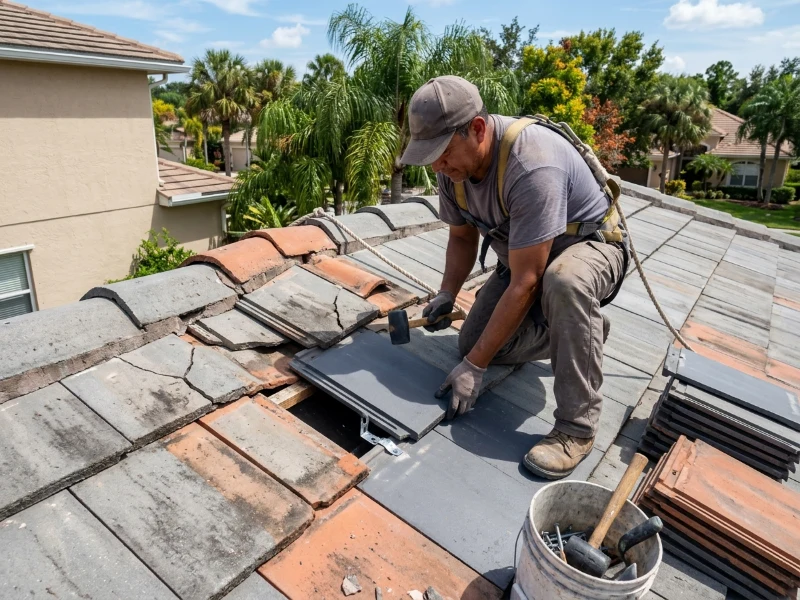
The Tile Looks Fine — So Why Is It Leaking?
This is the question we hear most often from tile roof owners in Coral Springs. The answer lies in how tile roofs actually work. Unlike shingle roofs where the shingle itself is the primary waterproofing layer, tile roofs rely on the underlayment beneath the tiles to keep water out. The tiles deflect the majority of rainfall and protect the underlayment from UV exposure, but water does travel between tile courses — especially during heavy or wind-driven rain.
When the underlayment was new, this wasn't a problem. It channeled water that passed the tiles safely down to the eaves. But after 15 to 20 years of heat, moisture cycling, and the gradual breakdown of the waterproofing material, the underlayment loses its ability to stop water. The result is a roof that looks perfect from the ground but leaks steadily during every significant rain event.
Addressing this requires lifting sections of tile, evaluating the underlayment condition, and either repairing or replacing the waterproofing layer before reinstalling the tiles. It's more involved than a simple tile swap — but it's the only approach that resolves the actual cause of the leak.
How We Inspect and Repair Tile Roofs
Tile roof repair requires careful handling, material knowledge, and a methodical approach to avoid creating new damage while fixing the existing problem.
Inspect Tiles, Flashing, and Ridge Details
We carefully walk the tile field, identifying cracked, broken, displaced, and loose tiles. We examine ridge and hip mortar, valley flashing, and transition details — noting each failure point and its relationship to any interior leaks reported by the homeowner.
Lift Tiles to Assess Underlayment Condition
Where leaking is present or suspected, we carefully lift tiles in the affected area to inspect the underlayment beneath. We look for deterioration, tears, voids, and signs of water migration. This step reveals whether the leak source is the tile, the underlayment, or both.
Source Matching Tiles and Prepare Repairs
We identify the existing tile profile and color, then source replacements. For discontinued profiles, we check reclaimed tile suppliers and compatible alternatives. Damaged underlayment sections are marked for replacement, and any compromised decking is assessed.
Complete Tile and Underlayment Repair
We replace broken tiles, reset displaced tiles, restore ridge and hip mortar, and replace any deteriorated underlayment sections. After reinstalling tiles, we verify proper overlap, drainage, and attachment — ensuring the restored area integrates with the surrounding roof system.
Tile Repair Scope Based on Damage Findings
Tile roof repair ranges from simple tile replacement to full underlayment restoration. The scope depends on what lies beneath the surface.
Tile Roof Repair FAQ
Tiles are the first layer of weather protection, but the underlayment beneath is what actually keeps water out. On many Coral Springs tile roofs — especially those over 15 years old — the underlayment has deteriorated while the tiles above remain in good condition. Water passes through the tile laps, reaches the failed underlayment, and enters the roof deck.
Minor hairline cracks in concrete tiles can sometimes be sealed, but tiles that are broken through, chipped at the overlap, or structurally weakened should be replaced. The repair decision depends on the crack location, tile type, and whether the crack allows water to bypass the tile's drainage path.
Concrete and clay tiles are designed to withstand weather, not foot traffic. Walking on tiles — especially older or brittle ones — cracks them from above. Each cracked tile creates a new water entry point. Professional roofers distribute their weight and know which areas can support foot traffic to minimize additional damage.
We identify the tile manufacturer, profile, and color blend from the existing installation. If the same profile is still available, we source it directly. When tiles have been discontinued, we check salvage sources, recycled tile suppliers, and compatible alternatives that closely match the shape and color of the original installation.
It depends on the extent of underlayment failure. If only a small section has deteriorated, the tiles in that area can be temporarily removed, the underlayment replaced, and the tiles reinstalled. When underlayment failure is widespread, a full re-roof — removing all tiles, replacing the underlayment and any damaged decking, and reinstalling the tiles — may be the more practical approach.
Tile Roof Leaking or Tiles Displaced? Schedule an Inspection
Whether you have cracked tiles, leaks with no visible tile damage, or displaced ridge caps after a storm, contact us for a professional tile roof evaluation. We'll inspect the tiles, check the underlayment condition, and provide a clear repair plan with a written estimate — before any work begins.