Roof Vent & Pipe Boot Repair in Coral Springs, FL
Every pipe, vent, and exhaust hood that exits through your roof creates a potential leak point. The rubber boots, metal collars, and sealant connections that waterproof these penetrations deteriorate under Florida's relentless UV and heat — often failing years before the surrounding roofing material. We inspect, repair, and replace all types of roof penetration seals across Coral Springs and Broward County.
Signs Your Pipe Boots or Vent Seals Have Failed
Pipe boot and vent seal failures are among the most common — and most preventable — causes of roof leaks. These indicators suggest that one or more roof penetrations may be compromised.
Leaks near bathroom ceilings or plumbing walls
The most common sign of a failed pipe boot is water appearing on or near the ceiling directly below a plumbing vent penetration. Because the vent pipe runs vertically through the roof, water that enters around the boot runs straight down the pipe and onto the ceiling below — making the leak location relatively easy to correlate with the roof penetration above.
Visible cracking or shrinkage of rubber collars from ground level
Using binoculars, you can often see pipe boots that have visibly cracked, warped, or pulled away from the pipe. In advanced failure, the rubber collar may split open entirely or curl back from the pipe surface, leaving an obvious gap around the penetration.
Musty odors in rooms below roof penetrations
Slow, chronic leaks around pipe boots can saturate insulation and ceiling drywall without producing visible dripping. The moisture trapped in these materials breeds mold, producing musty odors that seem to come from the walls or ceiling in rooms below the affected penetration.
Vent caps tilted, missing, or visibly damaged after storms
Storm winds can loosen or remove vent caps, leaving the vent pipe and boot fully exposed to direct rainfall. A post-storm inspection should always include checking vent caps and penetration hardware, as they're among the most vulnerable rooftop components.
What You Can Observe From the Ground & Interior
Pipe boots and vent hardware are often visible from ground level with binoculars. Combined with interior observations, you can build a reasonable picture of whether your penetrations need professional attention.
Count the pipes and vents visible on your roofline
A typical Coral Springs home has 3 to 8 roof penetrations — plumbing vents, exhaust fans, range hoods, and dryer vents. Knowing how many you have and where they're located helps correlate any interior leaks with specific penetrations.
Use binoculars to check boot condition from the yard
Look at each pipe boot from ground level. Visible cracks, gaps between the rubber and the pipe, or boots that appear warped or discolored indicate UV degradation. Even partially visible damage warrants a closer roof-level inspection.
Check ceilings below penetrations after heavy rain
Walk through the house after a heavy rainstorm and look at the ceiling beneath each known penetration location. Fresh moisture, darkening stains, or subtle swelling in the drywall indicate water entering around the penetration above.
Inspect accessible attic areas around vent pipes
If you can safely access the attic, look at the underside of the deck around vent pipe penetrations. Water staining, discoloration, or damp insulation around the pipe indicates the boot or seal above has been compromised.
Types of Roof Penetrations We Repair
Every hole cut through a roof surface is a potential leak point. Each type of penetration requires a specific sealing approach based on the pipe size, material, movement characteristics, and the surrounding roofing system.
Plumbing Vent Pipe Boots
Plumbing vent pipes are the most common roof penetrations on residential properties. The neoprene or rubber boot that seals around the pipe is exposed to constant UV and temperatures exceeding 150°F on dark shingle surfaces. Most standard boots last 8 to 12 years in Florida before the rubber cracks and separates from the pipe.
- Cracked or hardened rubber collar around the pipe
- Visible gap between the boot and the pipe surface
- Leaks appearing near bathroom or kitchen plumbing walls
Exhaust Fan & Range Hood Vents
Bathroom exhaust fans and kitchen range hoods vent through the roof with metal or plastic hoods. The hood-to-roof connection relies on a metal collar and sealant that can corrode or separate. Hot exhaust temperatures from cooking also accelerate sealant degradation around range hood penetrations.
- Rust staining around exhaust hood base
- Separated or lifted hood collar
- Water entering during rain near kitchen or bathroom exhaust
Dryer Vent Terminations
Dryer vents exit through walls or the roof, and the roof-mounted versions require a flashed connection similar to exhaust fans. Lint buildup around the vent can trap moisture against the sealant and boot material, accelerating deterioration. Birds and pests also damage vent caps and screens.
- Damaged or missing vent cap or screen
- Lint accumulation around the base of the vent
- Sealant failure at the roof connection point
Satellite & Equipment Mounts
Satellite dishes, solar panel mounts, and antenna brackets create penetrations that weren't part of the original roof design. Lag bolts through roofing material require proper flashing and sealing. Improperly sealed mounts — especially those installed by non-roofers — are common leak sources.
- Sealant cracking around lag bolt heads
- Missing or deteriorated flashing beneath equipment mounts
- Leaks appearing after satellite or equipment installation
Attic & Ridge Ventilation
Ridge vents, turbine vents, and box vents allow attic air circulation but require proper sealing where they connect to the roof surface. Failed vent-to-roof connections, damaged ridge vent baffles, and deteriorated foam closures all create water entry points — especially during wind-driven rain.
- Water staining in attic beneath vent locations
- Damaged or displaced ridge vent end caps
- Deteriorated foam closures along vent openings
Electrical & Conduit Penetrations
Electrical service masts, conduit runs, and solar system wiring all penetrate the roof surface. These smaller penetrations are often sealed only with caulk — which has a shorter lifespan than a properly flashed connection. Proper flashing integration is needed to prevent long-term water intrusion.
- Dried or cracked sealant around conduit bases
- Rust staining from corroded conduit hardware
- Slow water entry near electrical panels or service masts
Why Pipe Boots Fail Faster Than the Roof Around Them
A rubber pipe boot sits on the hottest part of the roof — the exposed surface directly in the sun. On a dark shingle roof in Coral Springs, surface temperatures regularly exceed 150°F during summer afternoons. The rubber absorbs this heat, expanding and contracting daily as temperatures rise and fall.
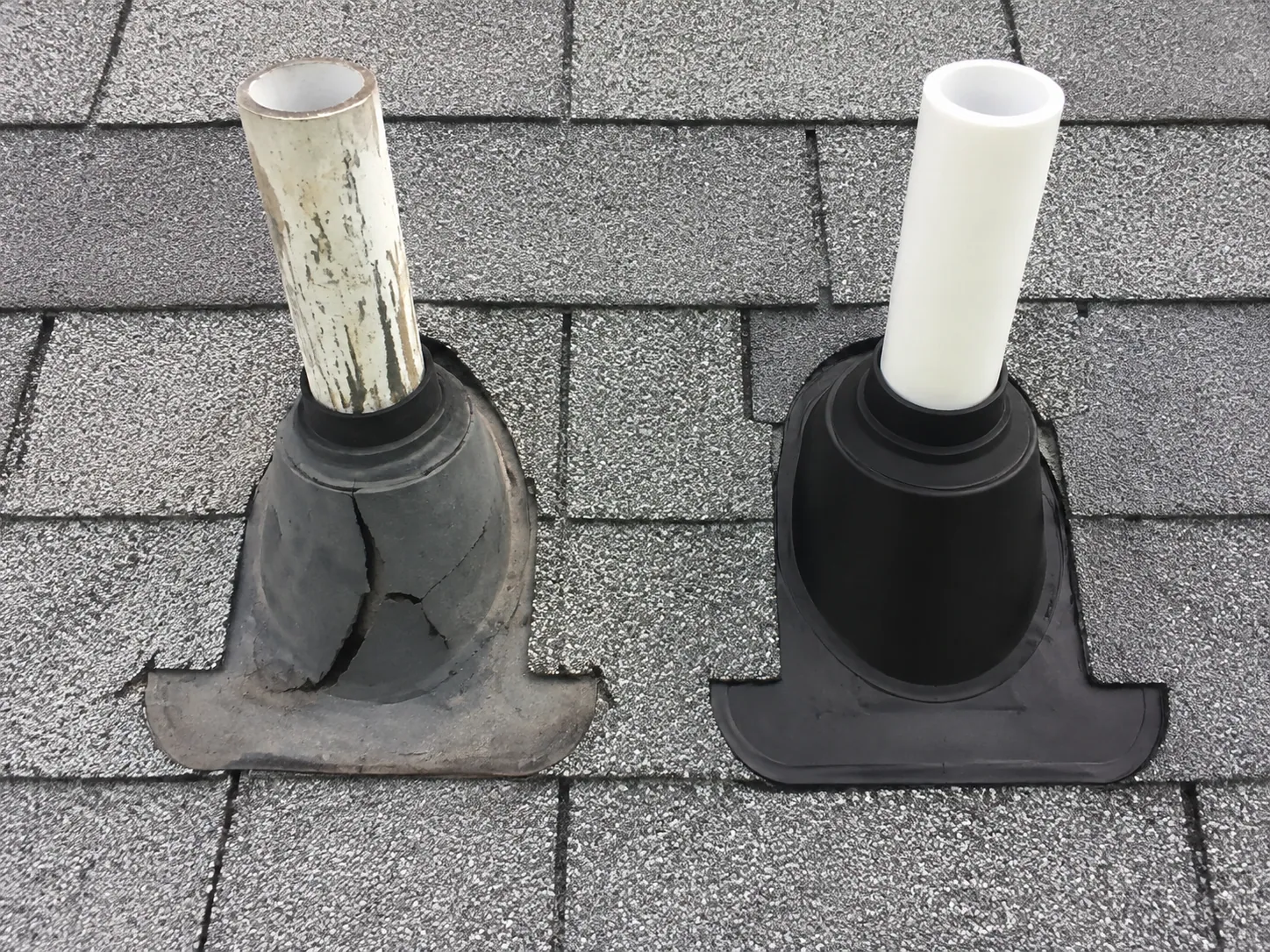
Over thousands of these thermal cycles, the neoprene loses its elasticity. It hardens, shrinks slightly, and eventually cracks — usually around the collar where it grips the pipe. Once the collar cracks, rain water runs down the pipe surface, passes through the gap, and enters the roof system. The leak may be small at first, appearing only during heavy rain, but it worsens as the crack widens over subsequent seasons.
This is why pipe boot failure is so common on roofs that are otherwise in good condition. The shingles, tiles, or membrane may have years of life left, but the rubber boots and sealant connections at penetrations give out first. Proactive boot replacement — ideally before cracking becomes visible — prevents the water damage, mold, and deck deterioration that result from years of slow water entry.
How We Inspect and Repair Roof Penetrations
Penetration repair requires more than swapping a boot. Proper repair integrates the new seal with the surrounding roofing material to prevent water from reaching the deck.
Inspect Every Penetration on the Roof
We check each pipe boot, vent collar, exhaust hood, and equipment mount — assessing the rubber condition, sealant integrity, metal corrosion, and the condition of the roofing material immediately surrounding each penetration. We photograph all findings for documentation.
Identify the Leak Path and Check for Deck Damage
For penetrations with confirmed or suspected leaks, we trace the water path to determine whether moisture has reached the underlayment or roof deck. This determines whether the repair scope extends beyond the boot itself.
Remove and Replace the Failed Boot or Seal
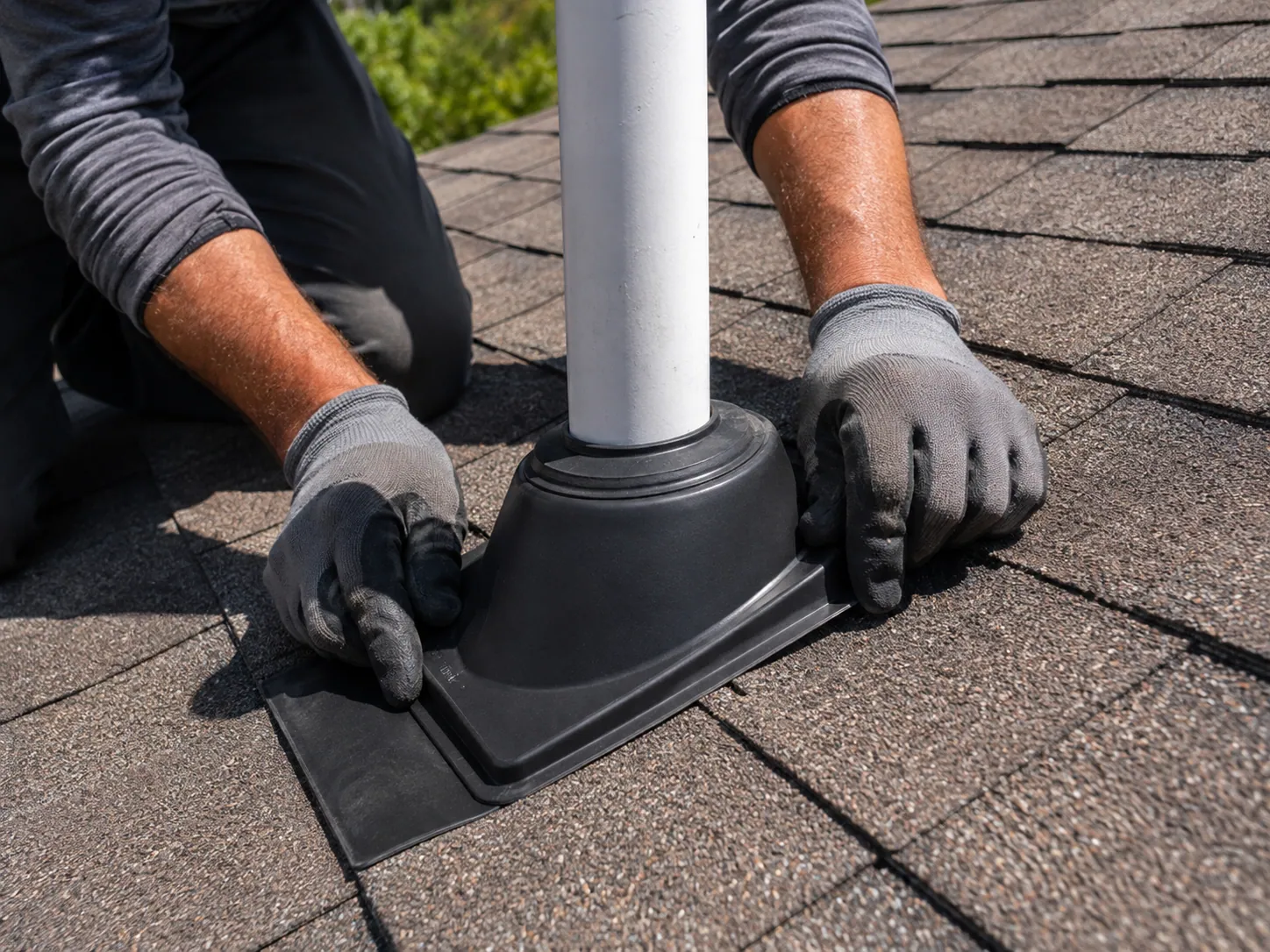
We lift the surrounding roofing material, remove the old boot or collar, clean the pipe and deck surface, and install a properly sized replacement. For standard plumbing vents, we use UV-resistant neoprene or metal-rubber hybrid boots for extended life in Florida's climate.
Reintegrate Roofing Material and Verify the Seal
The surrounding shingles, tiles, or membrane are reinstalled over the new boot with proper overlap. Sealant is applied only where needed — at the collar-to-pipe interface and at the boot-to-roofing transition. We verify that water will drain away from the penetration, not toward it.
Penetration Repair Scope Based on Damage Extent
Vent & Pipe Boot Repair FAQ
A pipe boot is a rubber or neoprene collar fitted around plumbing vent pipes where they penetrate the roof surface. It creates a watertight seal between the pipe and the roofing material. Florida's intense UV exposure and heat cause the rubber to dry out, crack, and shrink — typically within 8 to 12 years — breaking the seal and allowing water to run down the pipe into the building.
Once the rubber collar has cracked, hardened, or pulled away from the pipe, replacement is the appropriate repair. Sealant applied over a deteriorated boot is a temporary measure that typically fails within one to two Florida summers. Replacement involves removing the surrounding roofing material, installing a new boot with a fresh rubber collar, and reintegrating the roofing material around it.
Leaks that appear near bathroom ceilings, around plumbing stacks, or in areas directly below where vent pipes exit the roof are strong indicators of pipe boot failure. The leak may only appear during heavy rain when water volume at the penetration overwhelms the partially failed seal.
Standard neoprene boots last 8 to 15 years in Florida's climate. Higher-quality boots with UV-resistant rubber or metal-and-rubber hybrid designs can extend that range. The lifespan depends on sun exposure, roof surface temperature, and whether the boot was properly sized and installed around the pipe.
No. Different penetrations require different sealing methods. Plumbing vents use pipe boots sized to the vent diameter. Exhaust fans and range hoods have their own flashing collars. Electrical conduits, satellite mounts, and equipment supports each require appropriate sealing techniques. Using the wrong method or size creates gaps that allow water entry.
Cracked Pipe Boots or Leaking Vent Seals? We Can Help
If you suspect a pipe boot or vent seal is allowing water into your home, contact us for a professional penetration inspection. We'll check every boot, collar, and connection on your roof, identify the failures, and provide a written repair plan with UV-resistant replacement options suited for the Coral Springs climate.