Roof Deck & Water Damage Repair in Coral Springs, FL
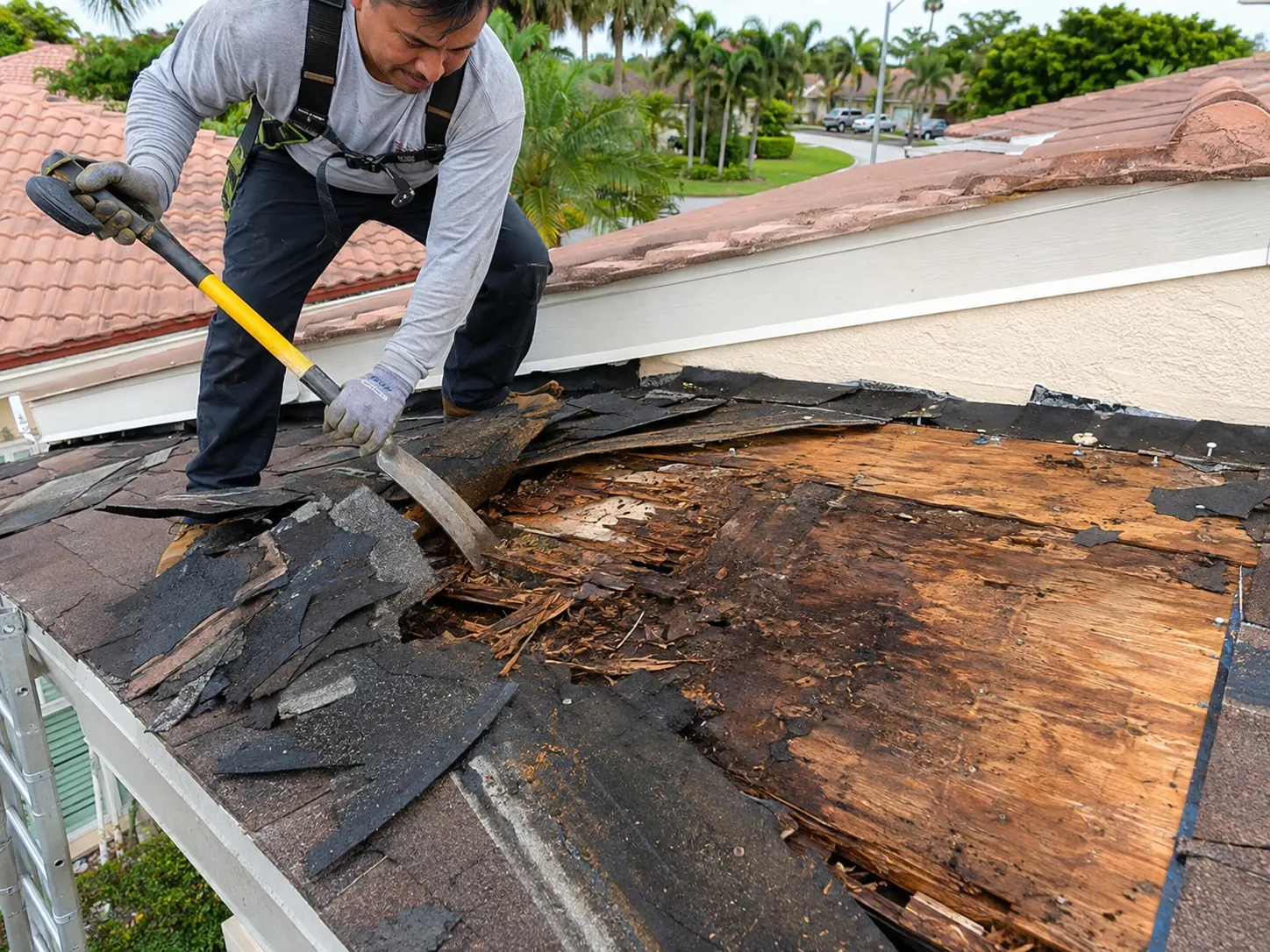
The roof deck — the plywood or OSB sheathing beneath your roofing material — is the structural foundation of your entire roof system. When water bypasses the surface covering and underlayment, the deck absorbs moisture, softens, delaminates, and eventually fails. We identify damaged decking, remove compromised sections, and install new sheathing that restores the structural integrity your roofing material depends on.
Signs Your Roof Deck May Be Damaged
Deck damage is hidden beneath the roofing material — you can't see it from the ground. These indicators suggest the structural sheathing beneath your roof may have been compromised by water intrusion.
Visible sagging in the roofline
When you look at your roof from across the street, the surface should follow a consistent plane. Dips, waves, or sags between the rafters or trusses indicate that the deck sheathing has softened and can no longer support the weight of the roofing material above it.
Persistent leaks despite surface repairs
If leak repairs to shingles, flashing, or pipe boots don't stop the water, the deck itself may be acting as a water pathway. Saturated plywood wicks moisture laterally, allowing water to travel from the entry point and emerge through the ceiling far from the original source.
Soft or spongy areas when walking the roof
A sound roof deck feels solid and firm underfoot. If areas compress noticeably, feel bouncy, or give way slightly under foot pressure, the plywood or OSB beneath has absorbed enough moisture to compromise its structural strength.
Dark staining or mold visible from the attic
If you can access the attic, look at the underside of the sheathing. Dark discoloration, active mold growth, or visibly delaminated plywood layers indicate sustained water exposure. These signs mean the deck is no longer performing as a structural panel and needs evaluation.
What You Can Observe Without Professional Tools
While deck damage is ultimately confirmed by removing the roofing material above it, several observations from the ground, attic, and interior can suggest whether the deck has been affected.
Look at the roofline from across the street
Stand back from the house and look at the ridge line and each slope. Waviness, dips between rafters, or sections that appear lower than the surrounding surface indicate deck that has softened and deflected under the weight of the roofing material.
Inspect the attic sheathing underside
If you can safely access the attic, look at the underside of the roof deck with a flashlight. Water stains, dark patches, mold growth, delaminated plywood layers, or visible daylight through the sheathing all indicate compromised decking.
Press a screwdriver into suspicious attic-side sheathing
Sound plywood resists a screwdriver firmly. If the screwdriver pushes into the wood easily, the deck has absorbed enough moisture to lose its structural integrity. Test multiple areas around the suspected zone to determine the approximate extent.
Note whether ceiling damage correlates with specific areas
Map the location and extent of ceiling damage to specific roof sections. If the same area repeatedly produces stains despite surface repairs, the deck in that zone may be serving as a water reservoir — absorbing water during rain and releasing it slowly afterward.
Common Causes of Roof Deck Damage
Roof decking doesn't fail on its own — it fails because water found a way through the layers above it. Understanding the upstream cause is essential for preventing the same damage from recurring after the deck is replaced.
Long-Term Leak From Failed Roofing Components
Chronic leaks from failed flashing, cracked pipe boots, or deteriorated shingles allow small amounts of water to reach the deck over months or years. The cumulative effect saturates the wood, promotes fungal rot, and eventually compromises the panel's structural capacity.
- Deck damage concentrated beneath known leak sources
- Progressive softening spreading outward from the entry point
- Mold and rot visible on the attic-side surface
Deteriorated Underlayment on Tile Roofs
On tile roofs where the underlayment has reached end-of-life, water passes through the tile laps, through the failed underlayment, and sits on the deck. Because tile roofs trap moisture and heat, the deck deterioration process accelerates — particularly during Florida's hot, humid summer months.
- Widespread deck damage beneath tile roofs over 20 years old
- Soft spots discovered during tile lift inspections
- Dark staining visible across large deck areas
Storm Damage and Sudden Water Intrusion
Hurricane and storm events that remove roofing material and expose the deck directly to rainfall can saturate sheathing in a single event. If the deck isn't dried quickly, the moisture promotes rapid rot — especially on OSB decking that absorbs water more aggressively than plywood.
- Deck swelling and delamination after storm exposure
- Rapid deterioration following a known breach
- Structural concerns developing within weeks of the event
Ponding on Flat Roofs
On flat and low-slope roofs, chronic ponding water that penetrates compromised membrane seams saturates the insulation and reaches the deck beneath. Because flat roofs don't drain water naturally, the exposure can be continuous — leading to deck damage even from relatively small membrane failures.
- Deck damage directly beneath ponding areas
- Saturated insulation above the affected deck
- Structural deflection increasing the ponding problem
Condensation From Poor Attic Ventilation
Inadequate attic ventilation traps warm, humid air against the deck's underside. In Coral Springs' climate, the temperature differential between the hot roof surface and the cooler interior can produce condensation on the sheathing. Over time, this moisture promotes the same rot and delamination as a direct leak — but without any obvious entry point.
- Uniform moisture staining across broad deck areas
- No identifiable leak source from the roofing material
- Damage concentrated in poorly ventilated attic sections
Previous Repairs That Didn't Address the Substrate
When surface roofing repairs are completed without checking the deck beneath, compromised sheathing remains in place under the new material. New shingles, underlayment, and flashing installed over rotted decking will fail prematurely — because the fasteners can't hold in softened wood and the deck can't support the material's weight.
- Recurring leaks in previously "repaired" areas
- New roofing materials showing premature nail pops
- Fastener pull-through on recently installed components
Why Deck Damage Can't Be Fixed From Above
When we find deck damage during a roof inspection, the question homeowners most often ask is whether the deck can be repaired without removing the roofing material on top. Unfortunately, it can't. A rotted plywood panel needs to be completely removed and replaced — and the roofing material above it must come off first.
Placing new roofing material over compromised decking creates several problems. Fasteners won't hold in softened wood, causing shingles or tiles to loosen over time. The deck's reduced structural capacity means it can flex under foot traffic or wind uplift, compromising the seal of any material installed above it. And the rot doesn't stop — fungal damage continues to spread through the wood even after the water source is eliminated, if the affected material isn't removed.
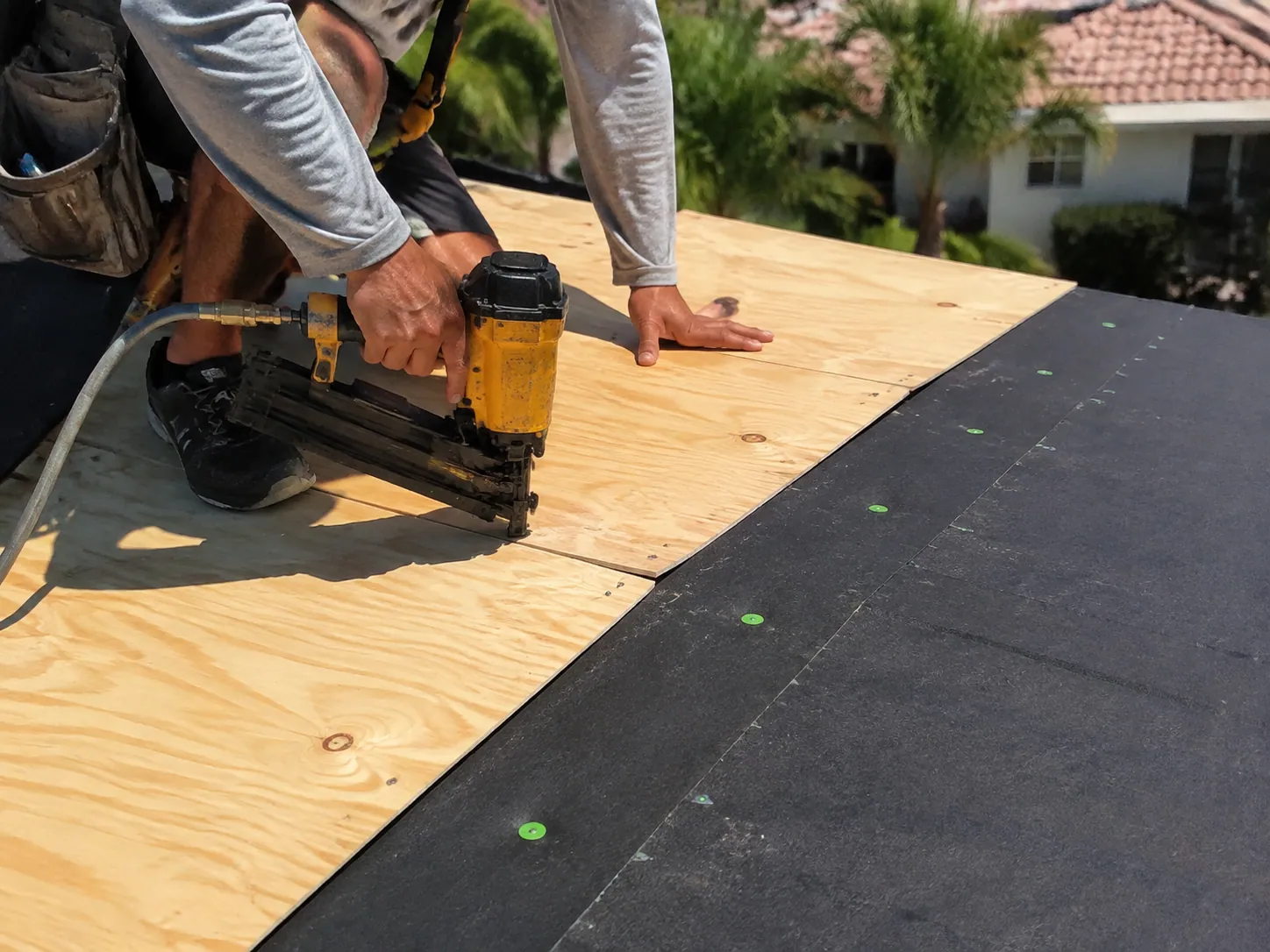
Proper deck repair involves removing the roofing material in the affected area, cutting out all compromised sheathing back to sound wood, installing new plywood or OSB that matches the existing deck thickness and fastener pattern, laying new underlayment, and then reinstalling the roofing material. It's a layered process — but each layer depends on the one beneath it being structurally sound.
How We Assess and Replace Damaged Decking
Deck repair is one of the most involved roof repairs we perform. It requires removing and reinstalling the roofing system layer by layer to access and replace the structural substrate beneath.
Identify the Damage Extent
We determine the affected area by testing the deck from the attic side (probing for softness) and the roof side (checking for deflection). We map the boundaries of the damaged zone and assess whether the damage extends beyond the area directly beneath the visible leak source.
Remove Roofing Material and Underlayment
We carefully remove the roofing material — shingles, tiles, or membrane — in the affected area, extending slightly beyond the damage boundary to ensure we can access all compromised decking. The underlayment is removed, and the full extent of the deck damage is confirmed visually.
Cut Out Damaged Decking and Inspect Framing
We cut the damaged plywood or OSB back to the nearest rafters or trusses, ensuring all softened, delaminated, or rotted material is removed. We inspect the underlying framing for moisture damage, rot, or mold — addressing any structural issues before the new deck is installed.
Install New Decking, Underlayment, and Roofing
New plywood or OSB matching the original specifications is cut, fitted, and fastened to the framing. Fresh underlayment is installed over the new and surrounding deck, and the roofing material is reinstalled with proper overlap and integration. We address the original leak source — the upstream failure that allowed water to reach the deck — to prevent recurrence.
Deck Repair Scope Based on Damage Extent
Roof Deck & Water Damage FAQ
Common indicators include soft or spongy areas when walking the roof, visible sagging in the roofline from ground level, dark water staining on the underside of the sheathing visible from the attic, and persistent interior leaks despite surface repair attempts. Deck damage is often hidden beneath intact roofing materials and only discovered during inspections or repairs.
Prolonged moisture exposure from failed roofing materials, deteriorated underlayment, leaking pipe boots, or failed flashing allows water to reach the plywood or OSB sheathing. Florida's heat and humidity accelerate fungal growth in wet wood, and the warm, dark environment beneath roofing materials is ideal for rot progression. Even small, chronic leaks can cause significant deck damage over several years.
Individual damaged sheets can be cut out and replaced without removing the entire deck. The replacement plywood is cut to fit between the nearest rafters or trusses, secured with proper fasteners, and integrated with the surrounding deck. The key is removing all compromised wood — partial patches over softened plywood lead to recurring problems.
Coverage depends on the cause of the damage. Sudden events like storm damage or fallen trees are typically covered under standard homeowner policies. Gradual deterioration from deferred maintenance or long-term neglect is generally excluded. Document the damage, report it to your insurer, and request a claim evaluation based on the specific circumstances.
Localized deck replacement — one or two sheets in a single area — can typically be completed in a day along with the roofing material and underlayment restoration. Larger areas involving multiple deck sections, structural evaluation, or coordination with interior repairs may require multiple days depending on the scope.
Suspect Rotted Decking or Water Damage Beneath Your Roof?
If your roof has soft spots, a sagging roofline, persistent leaks despite repairs, or visible damage from the attic, contact us for a professional deck assessment. We'll determine the extent of the damage, identify what caused the water to reach the deck, and provide a comprehensive repair plan that addresses both the symptom and the source.