Professional Shingle Roof Repair in Coral Springs, FL
Asphalt shingle roofs are the most common residential roofing system in Coral Springs — and they take a beating from Florida's sun, wind, and rain. Whether you're dealing with missing tabs after a storm, curling edges from heat exposure, or granule loss from years of UV bombardment, we inspect the affected area, evaluate the underlayment beneath, and restore your shingle system with properly matched materials.
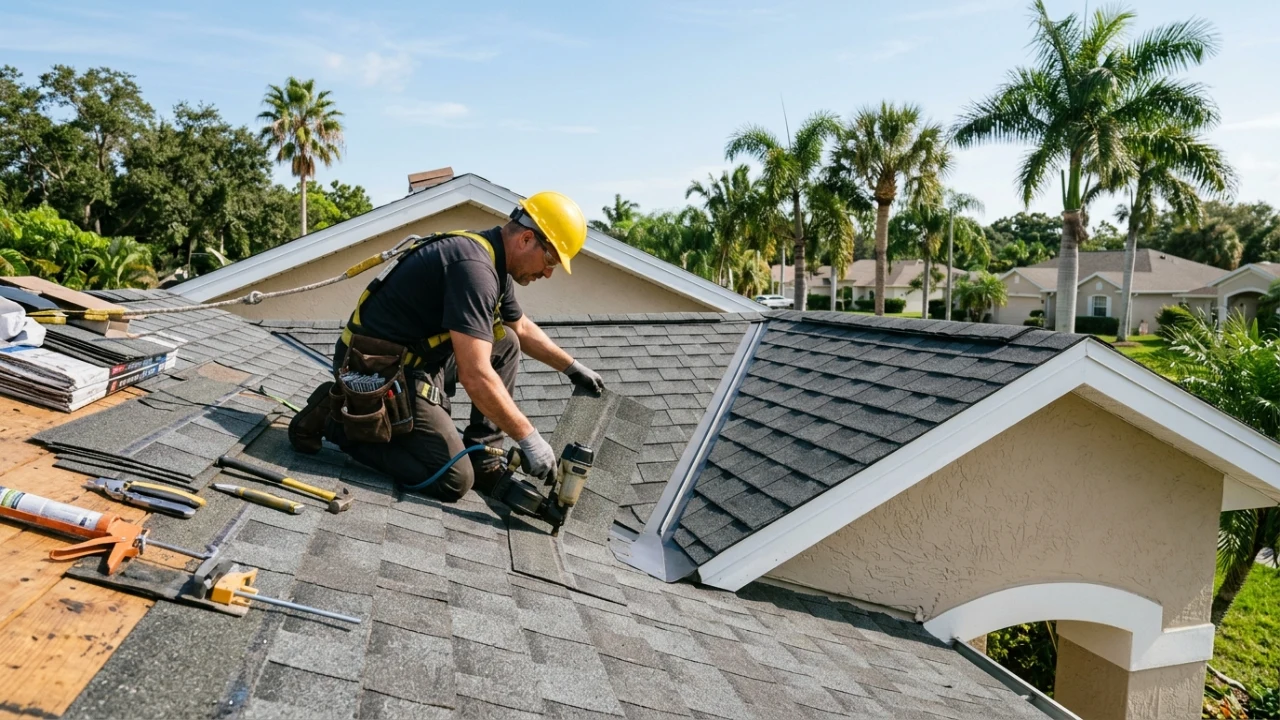
Signs Your Shingles Need Professional Attention
Shingle damage doesn't always mean missing tabs on the ground. Many shingle failures develop gradually from UV exposure, heat cycling, and moisture — often becoming visible only when a leak appears inside the home.
Shingle tabs missing or displaced after wind events
Gaps in the shingle field expose the underlayment directly to weather. Once underlayment is exposed to UV and rain, it degrades quickly — particularly the synthetic felt products common on older Coral Springs installations.
Edges curling upward or corners lifting away from the deck
Curled shingles create lift points where wind can get beneath the material. Once wind catches a curled edge, the force multiplies and can peel the shingle entirely — exposing the nail strip and adjacent shingles to the same risk.
Dark streaks or widespread granule loss on the surface
Granules protect the asphalt mat from UV radiation. When they wear away — visible as bare dark patches on the shingle surface or accumulations in gutters — the exposed mat deteriorates rapidly under South Florida sun, shortening the shingle's remaining life.
Cracked, brittle, or splitting shingle material
Thermal cycling — the daily expansion and contraction from Florida's intense heat — eventually causes asphalt shingles to crack and split. Brittle shingles break under foot traffic, wind stress, or even the impact of falling small debris like acorns or palm seeds.
Observations You Can Make Safely from the Ground
You don't need to climb on the roof to spot early signs of shingle problems. These ground-level and interior checks help you determine whether a professional inspection is warranted.
Look for shingle debris around the perimeter
Walk around the house after storms or high winds. Shingle tabs, fragments, or loose granule-coated material on the ground or in landscaping beds indicate active material loss from the roof above.
Check gutters for excessive granule buildup
Some granule shedding is normal over the life of a shingle roof. Unusual concentrations — especially after storms — suggest accelerated wear. If the downspout outlets are depositing dark, gritty sediment, the shingles above may be approaching the end of their effective life.
Use binoculars to scan the roof surface
From across the street or the back yard, look for color variations, lifted edges, visible nail heads, or patches where shingles appear darker than the surrounding field. These visual cues help identify problem areas before an inspection.
Inspect attic spaces for light or moisture
If your attic is safely accessible, look for daylight through the deck, water stains on the underside of the sheathing, or damp insulation. These interior signs confirm that the shingle and underlayment system above has been compromised.
Note any ceiling stains that appear or grow after rain
A stain that darkens or expands after each rainfall suggests an active shingle or flashing failure above. The stain location helps narrow the inspection area, though the actual roof entry point is often several feet away.
Common Shingle Failure Points
Shingle roofs fail in predictable patterns — especially in South Florida's demanding climate. Understanding where and how shingles deteriorate helps set expectations for the inspection and repair process.
Nail Line & Fastener Failures
Improperly placed nails — too high, too low, or driven at an angle — weaken the shingle's attachment. Over time, nail pops push through the surface, creating direct water entry points. Underdriven nails allow wind to lift shingles from the deck.
- Nail heads visible through shingle surface
- Shingles lifting along the nail strip
- Rust staining around exposed fasteners
Adhesive Strip Bond Failure
The thermally activated adhesive strip bonds each shingle to the one below. In extreme Florida heat, some adhesive strips activate too aggressively and then fatigue. Conversely, shingles installed during cooler months may never fully seal — remaining vulnerable to wind uplift from the first hurricane season forward.
- Shingle tabs fluttering in moderate wind
- Edges separating from the course below
- Wind-creased shingles that bent but didn't detach
Ridge & Hip Cap Damage
Ridge and hip cap shingles sit at the highest points of the roof and absorb the most wind force. They're typically the first components to lift, crack, or detach during storms. Once compromised, they expose the ridge vent or hip line beneath to direct water entry.
- Missing or shifted cap shingles at the peak
- Exposed ridge vent or bare hip line
- Cracked cap material from thermal cycling
Valley & Transition Wear
Valleys channel concentrated water flow during heavy rainfall. Shingles along valley lines wear faster than field shingles due to higher water volume and debris accumulation. Improperly woven or cut valleys also create common leak entry points.
- Worn granule surface along valley centerline
- Shingle edges splitting at the valley cut
- Debris trapped between overlapping shingle courses
Around Penetrations & Flashing
Shingles cut and sealed around pipe boots, vents, and flashing details are vulnerable to sealant failure and material cracking. The interface between the shingle field and these penetrations requires both proper overlap and durable sealant — both of which degrade under Florida conditions.
- Cracked or lifted shingles adjacent to penetrations
- Failed sealant visible around pipe boots
- Water staining on interior ceilings near plumbing stacks
Underlayment Beneath the Shingles
When shingles fail, the underlayment becomes the last line of defense. Older felt underlayment degrades quickly when exposed to UV. Synthetic underlayment lasts longer but still deteriorates under prolonged exposure. If underlayment has failed, even replacing the shingles above won't stop water from reaching the roof deck.
- Visible underlayment tears or gaps beneath missing shingles
- Brittle or powdery felt material
- Water staining on the deck visible from the attic
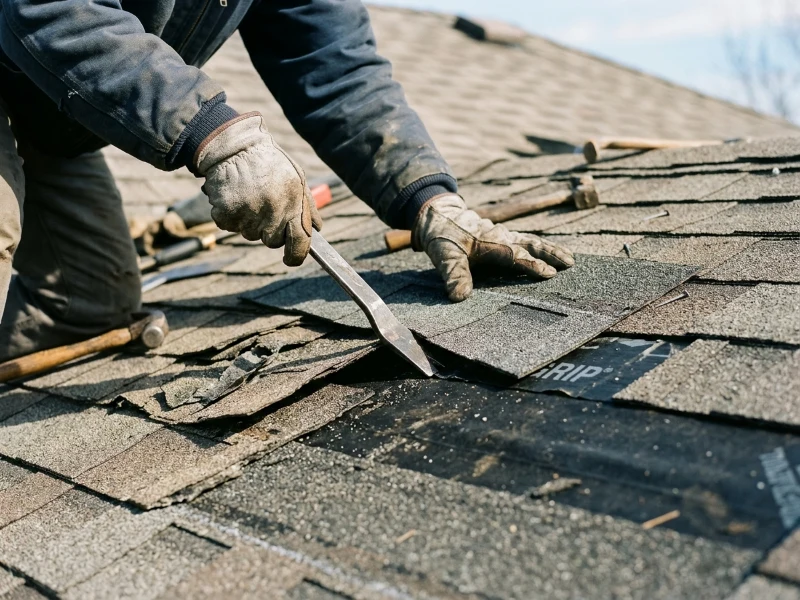
Why Florida Conditions Shorten Shingle Lifespan
A shingle rated for 25 or 30 years in a moderate climate doesn't last that long in South Florida. The combination of relentless UV exposure, surface temperatures that can exceed 160°F on dark-colored shingles, daily thermal expansion, and heavy seasonal rainfall accelerates every phase of the deterioration process.
Granule adhesion weakens earlier. The asphalt binder becomes brittle sooner. Adhesive strips cycle between activation and fatigue. And each hurricane season adds wind stress that wouldn't occur in calmer climates. A roof that looks reasonably intact from the ground may have shingles that crack under foot pressure or lift at the first strong gust.
This is why periodic professional inspections — not just post-storm checks — matter for shingle roofs in the Coral Springs area. Identifying shingles that have moved from "aging" to "failing" before they cause a leak gives homeowners more repair options and lower costs than waiting for water to appear inside the home.
How We Inspect and Repair Shingle Roofs
Every shingle repair starts with understanding the full condition of the area — not just replacing what's visibly damaged. Here's how we approach shingle work in Coral Springs.
Evaluate the Shingle Field and Identify Damage
We walk the roof and inspect each slope for missing, lifted, cracked, or worn shingles. We check the adhesive bond, look for nail pops, assess granule coverage, and note areas where the shingle surface has deteriorated beyond its protective capacity.
Inspect Underlayment and Decking Beneath
Where shingles are missing or compromised, we assess the underlayment condition. If the underlayment has degraded, we determine whether the deck below has absorbed moisture. This step prevents situations where new shingles are installed over substrate that's already failing.
Source Matching Materials
We identify the existing shingle manufacturer, profile, and color blend — then source the closest available match. For older roofs where an exact match is unavailable, we discuss the options with the homeowner before proceeding.
Complete the Repair and Inspect Surrounding Areas
We replace damaged shingles, re-seal flashing interfaces, address any exposed fasteners, and verify that adjacent shingles remain properly bonded. After the repair, we inspect the surrounding field to identify any developing issues that could become the next failure point.
Shingle Repair Scope Based on Damage Extent
Not every shingle issue requires the same level of intervention. Here's what to expect based on what the inspection reveals.
Shingle Roof Repair FAQ
If damage is limited to a specific area — a few missing tabs, localized wind creasing, or cracking around a penetration — targeted repair is usually sufficient. When shingles across multiple slopes show widespread granule loss, curling, brittleness, or adhesive failure, the roof may have reached the end of its serviceable life and a replacement evaluation becomes more appropriate.
We make every effort to find the closest available match to your current shingles. Because manufacturers adjust color blends over time and UV exposure changes the appearance of installed shingles, an exact match isn't always possible — particularly on roofs over ten years old. We source the nearest available profile and color to minimize visual contrast.
Several factors can cause newer shingles to lift in storms: improper nail placement, insufficient nails per shingle, failure of the adhesive strip to seal during installation, or wind speeds exceeding the shingle's rated capacity. Coral Springs is in a High Velocity Hurricane Zone, where wind demands are significant — even for shingles rated for high-wind applications.
Waiting typically increases the repair cost. Once shingles are missing or compromised, the underlayment beneath is exposed to UV, rain, and wind. Even short-term exposure can degrade the underlayment and allow moisture to reach the deck — turning a minor shingle replacement into a more involved repair that includes substrate work.
Curling results from prolonged UV exposure breaking down the asphalt binder, trapped moisture beneath the shingle mat, poor attic ventilation causing excessive heat buildup, or the natural aging process accelerated by South Florida's climate. Buckled shingles often indicate moisture issues in the roof deck or underlayment beneath them.
Shingles Missing, Cracked, or Lifting? Get a Professional Assessment
If your asphalt shingle roof is showing signs of wear, storm damage, or active leaking, contact us for a thorough inspection. We'll evaluate the shingle condition, check the underlayment beneath, provide color-matched material options, and give you a written estimate before any work begins.